
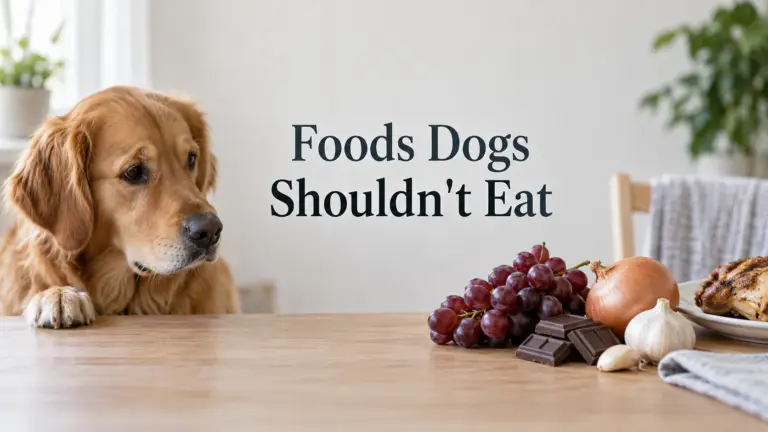
Foods Dogs Shouldn’t Eat: What’s Toxic and What’s Not
Most of us have done it. We're sitting down to dinner, our dog gives us that look, and we share a little something from our plate.
Maybe it's a piece of chicken, a bite of cheese, or a small piece of scrambled egg. We love our dogs, and sharing food is one way we show it.
But not everything on our plates is appropriate for them. Some human foods are genuinely toxic to dogs. Others are simply too fatty, salty, or calorie-dense to make good everyday treats. And some are perfectly reasonable to share in small amounts.
As a Certified Canine and Feline Nutritionist and the owner of Purrs McBarkin', I believe pet owners deserve to understand those differences.
I don't believe in telling someone that one bite of plain chicken will ruin their dog's health. That isn't how nutrition works. At the same time, there are certain foods I would never casually recommend sharing because the consequences can be serious.
The important questions are what the food contains, how much the dog eats, how it was prepared, and whether the individual dog has any medical conditions or dietary sensitivities.
Let's separate the genuine dangers from the foods that simply deserve a little common sense.
First, What If Your Dog Eats Something Toxic?
If you suspect your dog has eaten something potentially poisonous, contact your veterinarian or an animal poison control service promptly.
ASPCA Animal Poison Control: (888) 426-4435
The service is available 24 hours a day. A consultation fee may apply.
Try to identify what your dog ate, approximately how much was consumed, when it happened, and your dog's body weight. Save the food packaging or ingredient list if it's available.
Do not induce vomiting or administer home remedies unless a veterinary professional instructs you to do so.
Some toxic exposures can cause serious damage before obvious symptoms appear. Waiting for your dog to look sick is not always safe.
Foods That Can Cause Serious Poisoning
These are the foods I believe every dog owner should know about. Their potential effects go beyond ordinary digestive upset.
Grapes, Raisins, and Related Dried Grapes
Grapes and raisins can cause acute kidney injury in dogs. This also includes sultanas and certain dried currants made from grapes.
One of the difficulties with grape toxicity is that the amount required to cause serious illness is not predictable. Some dogs may develop significant problems after relatively small exposures, while others may appear unaffected.
Researchers have identified tartaric acid and related compounds as likely contributors to grape toxicity, although individual susceptibility remains difficult to predict.
If your dog eats grapes or raisins, contact your veterinarian or animal poison control immediately. Don't assume that a small quantity is harmless.
Xylitol, Also Called Birch Sugar
Xylitol is a sugar substitute found in some sugar-free products, including certain chewing gums, candies, baked goods, peanut butters, and other nut spreads.
In dogs, xylitol can trigger a rapid release of insulin, causing blood glucose to drop dangerously low.
Depending on the amount consumed, it may also cause severe liver damage.
Symptoms can include vomiting, weakness, loss of coordination, tremors, seizures, or collapse.
The FDA warns that xylitol poisoning can begin very quickly, sometimes within minutes of exposure.
Always check the ingredients before giving your dog peanut butter or another human snack.
If xylitol is listed and your dog has eaten the product, seek emergency veterinary guidance immediately.
Chocolate, Cocoa, and Caffeine
Chocolate contains compounds called methylxanthines, particularly theobromine and caffeine.
Dogs metabolize these substances differently from humans, and excessive exposure can affect the heart and nervous system.
Possible signs include vomiting, diarrhea, restlessness, rapid heart rate, tremors, and seizures.
Not all chocolate has the same concentration of these compounds.
Unsweetened baking chocolate and cocoa powder generally contain far more theobromine than milk chocolate. Dark chocolate is also a greater concern than a similar quantity of milk chocolate.
The amount eaten and the dog's body weight matter considerably.
However, I would not recommend using that information to guess whether an exposure is safe. If your dog eats chocolate, contact a veterinarian or poison control service for an assessment based on the actual product and amount.
Coffee grounds, caffeine supplements, and energy drinks also present poisoning risks and should be kept away from dogs.
Onions, Garlic, Chives, and Leeks
This category deserves a more detailed explanation because there's considerable misunderstanding about garlic in particular.
Onions, garlic, chives, and leeks belong to the Allium family. These plants contain sulfur compounds that can cause oxidative damage to red blood cells when consumed in sufficient amounts.
Severe exposure can lead to hemolytic anemia, a condition in which red blood cells are damaged or destroyed faster than the body can replace them.
But I want to be accurate about something.
A tiny incidental amount of garlic is not the same as a dog eating several cloves or a concentrated garlic preparation.
Garlic toxicity is influenced by the amount consumed, the form of garlic, the dog's size, and the pattern of exposure.
In a 2000 study published in the American Journal of Veterinary Research, dogs received garlic extract equivalent to 5 grams of fresh garlic per kilogram of body weight daily for seven days.
The researchers found measurable changes in red blood cells, including Heinz body formation and decreases in red blood cell measurements. However, the dogs did not develop clinical hemolytic anemia during the study.
That does not mean the garlic was harmless. It means the researchers identified evidence of oxidative blood cell damage without observing clinical hemolytic anemia in those particular animals.
A separate 2018 study investigated a specially prepared aged garlic extract administered to Beagles for 12 weeks. At the studied doses, the researchers did not observe harmful changes in blood counts or the examined clinical measurements.
However, aged garlic extract is not chemically identical to fresh garlic, garlic powder, or other commercially available garlic preparations. The study was small and does not establish that ordinary garlic is safe at any particular household dose.
Here's how I look at it from a nutritional standpoint.
If a dog accidentally consumes a tiny amount of garlic seasoning, that does not automatically mean poisoning has occurred. But I would not casually recommend adding garlic to a dog's meals, especially in concentrated forms, without understanding the risks.
Garlic powder and other dehydrated forms deserve particular caution because relatively small volumes may contain concentrated amounts of garlic.
Repeated exposures also matter. Clinical signs of Allium-related anemia may not appear until several days after ingestion.
If your dog eats a substantial or uncertain amount of garlic or onion, a concentrated product, or develops concerning symptoms, contact a veterinarian or poison control service promptly.
There is no universal household serving size that can be declared safe for every dog.
For ordinary feeding, I prefer avoiding unnecessary exposure to concentrated onion and garlic seasonings rather than trying to establish a safe amount through experimentation.
Macadamia Nuts
Macadamia nuts can cause an unusual toxicosis in dogs.
Symptoms may include weakness, especially in the hind legs, vomiting, tremors, difficulty walking, and elevated body temperature.
Many affected dogs recover with appropriate veterinary management, but the symptoms can be significant.
Macadamia nuts should not be offered as treats.
Alcohol and Raw Yeast Dough
Alcohol can depress the central nervous system and interfere with several essential physiological functions.
Even relatively small quantities may cause problems, particularly in smaller dogs.
Raw bread dough containing active yeast creates another concern.
The dough can expand inside the stomach, and fermentation can produce alcohol. This creates risks of abdominal distension and alcohol poisoning.
Keep alcoholic beverages, alcohol-containing desserts, and raw yeast dough out of your dog's reach.
Foods That Aren't Necessarily Toxic but Deserve Caution
Now let's talk about the foods people commonly share from the dinner table.
These are not all poisons. The concerns generally involve fat content, salt, calories, preparation methods, digestive tolerance, or hidden ingredients.
Rotisserie Chicken
Chicken can be an excellent source of protein for dogs. The problem with many store-bought rotisserie chickens isn't the chicken itself.
It's everything that may come with it.
Rotisserie chicken can contain substantial amounts of sodium, added fat, onion or garlic seasonings, and other ingredients that aren't necessary for your dog.
Cooked chicken bones are another important concern because they can splinter and cause injury or obstruction.
If you want to share chicken, I would choose a small amount of plain, thoroughly cooked, boneless chicken without heavy seasoning or skin.
A dog with a confirmed chicken allergy should, of course, avoid chicken regardless of how it is prepared.
Lunch Meat and Hot Dogs
Deli meats and hot dogs are convenient, but they're often high in sodium, fat, and calories.
Some also contain onion or garlic seasonings that may be relevant depending on the formulation and quantity consumed.
I'm not suggesting that a dog accidentally eating a small piece of ordinary lunch meat has automatically been poisoned.
My concern is that processed meats are generally poor choices for routine rewards when simpler alternatives are available.
If your dog enjoys meat treats, I'd rather see a suitable product with clear ingredients and a nutritional profile that makes sense for that animal.
Bacon, Sausage, and Fatty Meat Trimmings
Dogs often love fatty foods. That doesn't mean those foods agree with every dog's digestive system.
Large amounts of fatty table scraps can cause gastrointestinal upset and are recognized as a possible risk factor for pancreatitis in dogs.
Pancreatitis is inflammation of the pancreas, and it can be painful or even life-threatening in severe cases.
However, not every dog that eats a small piece of bacon will develop pancreatitis.
The risk is not that simple.
A dog's underlying health, previous history of pancreatitis, the amount of fat consumed, and other medical factors all matter.
I would be particularly cautious about fatty trimmings, chicken skin, bacon grease, and rich meat drippings in dogs with a history of pancreatitis or known fat sensitivity.
Cheese
Cheese is another food that sometimes gets described as though it's universally harmful to dogs.
That isn't accurate.
Some dogs tolerate a small amount of cheese perfectly well. Others experience gas, loose stools, or abdominal discomfort, partly because of difficulty digesting lactose.
Fat content and portion size also matter.
There is insufficient evidence to claim that a small amount of cheese routinely causes yeast infections or chronic intestinal inflammation.
If your dog tolerates cheese and doesn't have a medical reason to avoid it, an occasional small piece may be acceptable.
I wouldn't use large quantities as everyday treats, particularly for dogs that need to manage their weight or dietary fat intake.
Bread, Rolls, and Pizza Crust
A small piece of plain, fully baked bread is not inherently poisonous to most dogs.
However, bread and rolls primarily add calories and generally aren't especially useful as nutritional rewards.
Pizza crust may also contain garlic, onion seasoning, cheese, or substantial amounts of oil.
Raisin bread is a different matter because raisins can cause kidney injury. Raw yeast dough is also dangerous, as discussed earlier.
If someone asks whether their dog can have a small piece of plain baked bread, I wouldn't tell them it will ruin their dog's digestion.
I would simply explain that there are usually more nutritionally useful choices.
French Fries, Potato Chips, and Fried Foods
These foods are generally high in fat, calories, and salt.
An occasional small exposure is not equivalent to poisoning, but regularly sharing fried foods can contribute unnecessary calories and may cause digestive upset.
Some flavored chips also contain onion or garlic powders, so ingredients matter.
I would not tell pet owners that one French fry causes cancer or permanently damages the intestinal microbiome. Those are claims that go beyond the available evidence.
My recommendation is simpler: fried foods don't offer much nutritional value as dog treats, and there are better alternatives.
Macaroni and Cheese, Creamy Pasta, and Casseroles
Rich mixed dishes can contain several ingredients that deserve attention.
High fat content, large portions, dairy, excessive salt, and seasonings may cause problems for some dogs.
More importantly, casseroles and sauces may contain onions, garlic, raisins, or other ingredients that owners don't immediately think about when sharing food.
The complete recipe matters more than the name of the dish.
If you aren't sure what's in the food, I recommend not sharing it.
Ice Cream and Whipped Cream
Most ice cream is high in sugar, fat, or both, and some dogs have trouble digesting lactose.
Chocolate-containing varieties and products sweetened with xylitol can create much more serious concerns.
A tiny amount of ordinary whipped cream isn't automatically toxic, but that doesn't make it a good everyday treat.
It's also worth remembering that small dogs can consume a surprisingly large portion of their daily calories from just a few human snacks.
Peanut Butter
Peanut butter can be a useful occasional treat for some dogs, particularly when used in enrichment toys.
I prefer products with simple ingredients, without xylitol, and without unnecessary sweeteners.
However, ordinary peanut butter is not proven to cause yeast overgrowth simply because it contains added sugar or oils.
The more immediate considerations are the ingredient list, calorie density, fat content, and portion size.
Always check for xylitol before offering any peanut butter product.
Scrambled Eggs
Eggs are a useful example of why I don't believe in labeling every human food as dangerous.
Thoroughly cooked eggs provide protein and several important nutrients.
A small amount of cooking fat doesn't automatically turn an egg into something poisonous.
However, heavily buttered eggs, large amounts of cheese, or onion and garlic seasonings may make the dish less appropriate for a particular dog.
For sharing, plain, thoroughly cooked eggs are a straightforward option, provided the dog tolerates them and the portion fits its overall diet.
What About Bones and Food Scraps?
Not all food-related hazards are chemical poisonings.
Cooked bones can splinter, damage teeth or the digestive tract, become lodged, or cause an obstruction.
Raw bones also carry risks, including broken teeth, choking, gastrointestinal injury, and bacterial contamination.
Fruit pits and corn cobs may cause choking or intestinal obstruction.
Food packaging can be dangerous, too. Dogs sometimes swallow wrappers or get their heads trapped inside empty snack bags.
These are mechanical hazards, not nutritional deficiencies or food intolerances.
I recommend keeping bones, pits, corn cobs, discarded food packaging, and other potentially hazardous scraps out of reach.
Human Foods That Can Be Shared Appropriately
I don't believe we need to frighten pet owners away from every food that comes out of their kitchen.
There are ordinary foods that many healthy dogs can enjoy in reasonable amounts.
Examples include:
- Plain cooked chicken or turkey: Boneless and without heavy seasoning.
- Thoroughly cooked eggs: Plain and offered in appropriate portions.
- Carrots: Raw or cooked, cut into suitably sized pieces.
- Green beans: Plain, without added salt or rich sauces.
- Blueberries: A few can make a simple occasional reward.
- Apple slices: Remove the core and seeds, and cut into suitable pieces.
- Plain cooked pumpkin: Unsweetened and without pie spices or other additions.
Of course, even foods that are generally suitable may be inappropriate for an individual dog with a confirmed food allergy, digestive disorder, or medically necessary diet.
And any human-food treat should be given in a way that avoids choking.
The goal is to make an informed decision, not assume every food is safe just because it is natural.
How Much Treat Food Is Too Much?
One thing I emphasize at Purrs McBarkin' is that treats count toward daily calorie intake.
The World Small Animal Veterinary Association recommends that treats make up no more than 10% of a dog's daily calories.
That includes commercial treats, training rewards, chews with calories, and food shared from the dinner table.
For example, if a dog's appropriate daily energy intake is 500 calories, the general 10% guideline would allow a maximum of about 50 calories from treats.
That's a limit, not a goal. Some dogs may need considerably less.
Dogs with obesity, pancreatitis, food allergies, or other medical conditions may require tighter restrictions or specially selected treats.
The remaining calories should generally come from an appropriate complete and balanced diet that supplies the animal's essential nutrients.
Too many treats can displace nutritionally important food even when the treats themselves aren't poisonous.
Why I Prefer Treats Made With a Purpose
At Purrs McBarkin', I spend a lot of time helping customers understand pet food ingredients and nutrition.
I want people to feel comfortable asking questions. That includes asking whether something from their refrigerator is safe for their dog.
I'm not going to tell someone they need to buy an expensive commercial treat if a small piece of plain cooked chicken works well for their healthy dog.
But I will encourage them to consider the nutritional value, amount, and ingredient quality of what they're feeding.
For dogs with special dietary needs, a carefully selected commercial treat may be easier to manage because the ingredient list and nutritional information are available.
For others, a little plain meat or a suitable fruit or vegetable may be perfectly reasonable.
And for training, sometimes a portion of the dog's regular food is all that's needed.
You don't have to make treat time complicated. You just have to be thoughtful.
My Final Thoughts
I believe food is one of the most important things we can control when caring for our dogs.
That doesn't mean every bite needs to come from a bag labeled specifically for pets. It means understanding that dogs have nutritional requirements and tolerances that aren't identical to ours.
Some foods, such as grapes and xylitol-containing products, present genuine poisoning concerns and demand prompt attention.
Other foods, such as cheese, plain bread, or a little cooked chicken, are not automatically dangerous. Whether they are appropriate depends on the dog, the preparation, and how much is given.
And foods such as bacon, sausage, rich leftovers, and heavily seasoned dishes may be better left off the menu because they add unnecessary fat, salt, calories, or potentially harmful ingredients.
Not everything people eat is dangerous for dogs. But not everything we enjoy belongs in their bowl, either. Knowing the difference is what matters.
Most pet owners share food because they love their animals. I'd rather help them make good decisions than make them feel guilty for asking.
As a Certified Canine and Feline Nutritionist, my role is to explain the nutritional side of those choices. When an exposure may be toxic or an animal becomes ill, that's a matter for a veterinarian or veterinary toxicologist.
If you're uncertain about an ingredient or want help choosing suitable treats for your dog, stop by Purrs McBarkin' in Hartsville, South Carolina.
We'll look at the ingredients, consider your dog's needs, and find something that makes sense.
Science first. Marketing last.
Scientific References and Further Reading
-
ASPCA Animal Poison Control Center: People Foods to Avoid Feeding Your Pets.
Veterinary toxicology guidance on chocolate, grapes, onions, garlic, xylitol, macadamia nuts, alcohol, yeast dough, and other food hazards.
-
Merck Veterinary Manual: Garlic and Onion (Allium spp) Toxicosis in Animals.
Peer-reviewed veterinary toxicology information on exposure, oxidative red blood cell damage, delayed clinical signs, and treatment.
-
Lee KW, Yamato O, Tajima M, et al. (2000). Hematologic Changes Associated With the Appearance of Eccentrocytes After Intragastric Administration of Garlic Extract to Dogs. American Journal of Veterinary Research. 61(11):1446-1450.
Controlled canine study documenting oxidative red blood cell changes following substantial garlic extract exposure.
-
Safety and Efficacy of Aged Garlic Extract in Dogs. BMC Veterinary Research. 2018.
Small study of a specific aged garlic preparation administered at controlled doses. The findings should not be generalized to all garlic products.
-
Cornell University College of Veterinary Medicine: Grape and Raisin Toxicity.
Explains the unpredictability of grape toxicity, potential kidney damage, and the importance of prompt veterinary attention.
-
U.S. Food and Drug Administration: Paws Off! Xylitol Is Toxic to Dogs.
Information about xylitol-containing products, hypoglycemia, liver injury, and emergency response.
-
Merck Veterinary Manual: Pancreatitis and Other Disorders of the Pancreas in Dogs.
Veterinary guidance on pancreatitis, potential risk factors, and nutritional management.
-
World Small Animal Veterinary Association: Feeding Treats to Your Dog.
Guidance on safe rewards, treat calories, and the recommendation to limit treats to no more than 10% of daily energy intake.
-
Association of American Feed Control Officials: Reading Pet Food Labels.
Explains nutritional adequacy and complete and balanced pet foods.
Educational disclaimer: This article provides general canine nutrition and food-safety information. It is not a substitute for veterinary diagnosis, treatment, or individualized toxicology advice. If your dog eats a potentially toxic substance, contact your veterinarian or an animal poison control service promptly. Do not attempt to induce vomiting or administer treatments without professional instructions.